How to Get Pet Smell Out of a Couch
Published
A dog that naps on the cushions, a cat that misses the litter box, a puppy still learning: sooner or later most pet owners notice a smell coming from the couch. The good news is that fresh accidents and light odours can often be handled at home. The key is to treat the smell at its source without making it worse, because a few common habits, like reaching for a steam cleaner, can lock the odour in.
Here’s a safe, step-by-step approach, and how to tell when it’s time to call a professional.
Why pet smells stick to couches
Upholstery is built in layers: the fabric, then foam or fibre fill inside the cushions, and padding over the frame. Urine soaks through the fabric quickly and spreads into the fill, where you can’t see or reach it. As it dries, the water evaporates but uric acid salts stay behind. They don’t dissolve easily in plain water, and humidity can bring the smell back. That’s why a spot can look clean and still smell on a damp day.
Dander, saliva and body oils from pets that sleep on the couch also build up in the fabric over time and add to a general “pet” smell, even without accidents.
Step 1: Blot, don’t rub
If the accident is fresh, act right away:
- Press white paper towels or a clean white cloth firmly onto the wet area. Keep switching to dry towels until no more moisture comes up.
- Don’t rub or scrub. Rubbing pushes urine deeper into the cushion and can fray or fuzz the fabric.
- If the cushion has a zip-off cover, unzip it and check whether the liquid reached the foam. Don’t put the cover in the washing machine unless its care label says it’s washable, because many covers shrink and won’t fit back on.
Step 2: Check the cleaning code
Look for the care tag under a seat cushion or on the frame. Most couches have a cleaning code:
- W: water-based cleaners are safe.
- S: solvent cleaners only. Water, including most enzyme sprays, can leave rings or shrink the fabric.
- WS (or W/S): water-based or solvent cleaners, used with care.
- X: vacuum or brush only. No water or solvent.
Enzyme cleaners are water-based, so the DIY steps below are for W and WS fabrics. If your couch is S or X, or you can’t find a tag, it’s safer to skip home treatment and ask a professional.
Step 3: Test a hidden spot
Before you use any cleaner on the visible part of the couch, test it on a hidden area: the back of a skirt, the underside of a cushion or a seam at the back. Apply a little, blot, and let it dry fully. If you see colour change, rings or a change in texture, stop.
Velvet, linen, silk, viscose blends and leather are especially easy to mark, so be extra careful with them.
Step 4: Use an enzyme cleaner, not steam
For urine, an enzyme cleaner made for pet accidents is the right type of product. The enzymes break down the organic compounds that cause the odour instead of covering them with fragrance.
- Follow the label. Apply enough to reach as deep as the urine went. If it soaked into the cushion, a light mist on the surface won’t reach it.
- Give it time to work. Enzymes need to stay in contact with the stain for the time the label recommends, so don’t blot it all off immediately.
- Let the area air dry, with a fan or an open window to help. Keep pets off the spot until it’s dry.
Don’t use steam or heat on urine before an enzyme treatment. Heat from a steam cleaner, an iron or a hair dryer can set the stain and the odour into the fibres, making them much harder to remove later.
Also avoid:
- Ammonia-based cleaners. Ammonia smells similar to urine and can encourage pets to mark the same spot again.
- Mixing products. Never mix bleach with ammonia or other cleaners. It can release toxic fumes, and bleach can permanently discolour upholstery.
- Air fresheners and scented sprays. They mask the smell for a while but don’t remove the source.
Step 5: Finish with baking soda
Once the area is completely dry, baking soda can help with leftover surface odour:
- Sprinkle a thin, even layer over the fabric.
- Leave it for several hours or overnight, with pets kept away from the couch.
- Vacuum it up thoroughly with the upholstery attachment.
Baking soda absorbs surface odours, but it doesn’t break down urine deep in the cushion. If the smell is still there after it dries, the source is probably deeper than DIY products can reach.
Day-to-day habits that help
- Vacuum the couch every week or two with the upholstery attachment, including seams and under the cushions.
- Put a washable throw where your pet likes to lie, and wash it often.
- Find hidden spots with a UV flashlight in a dark room. Dried urine often shows up under UV light, which helps if you can smell it but can’t see it.
When to call a professional
Home treatment works best on small, fresh accidents on W or WS fabric. It’s time to call a pro if:
- The smell keeps coming back, especially on humid days.
- The urine soaked into the cushion foam or the couch has had repeated accidents.
- The tag says S or X, there’s no tag, or the couch is velvet, linen, silk or leather.
- You see rings, colour change or stiffness after trying a cleaner.
- The stain is large or old, or several pieces are affected.
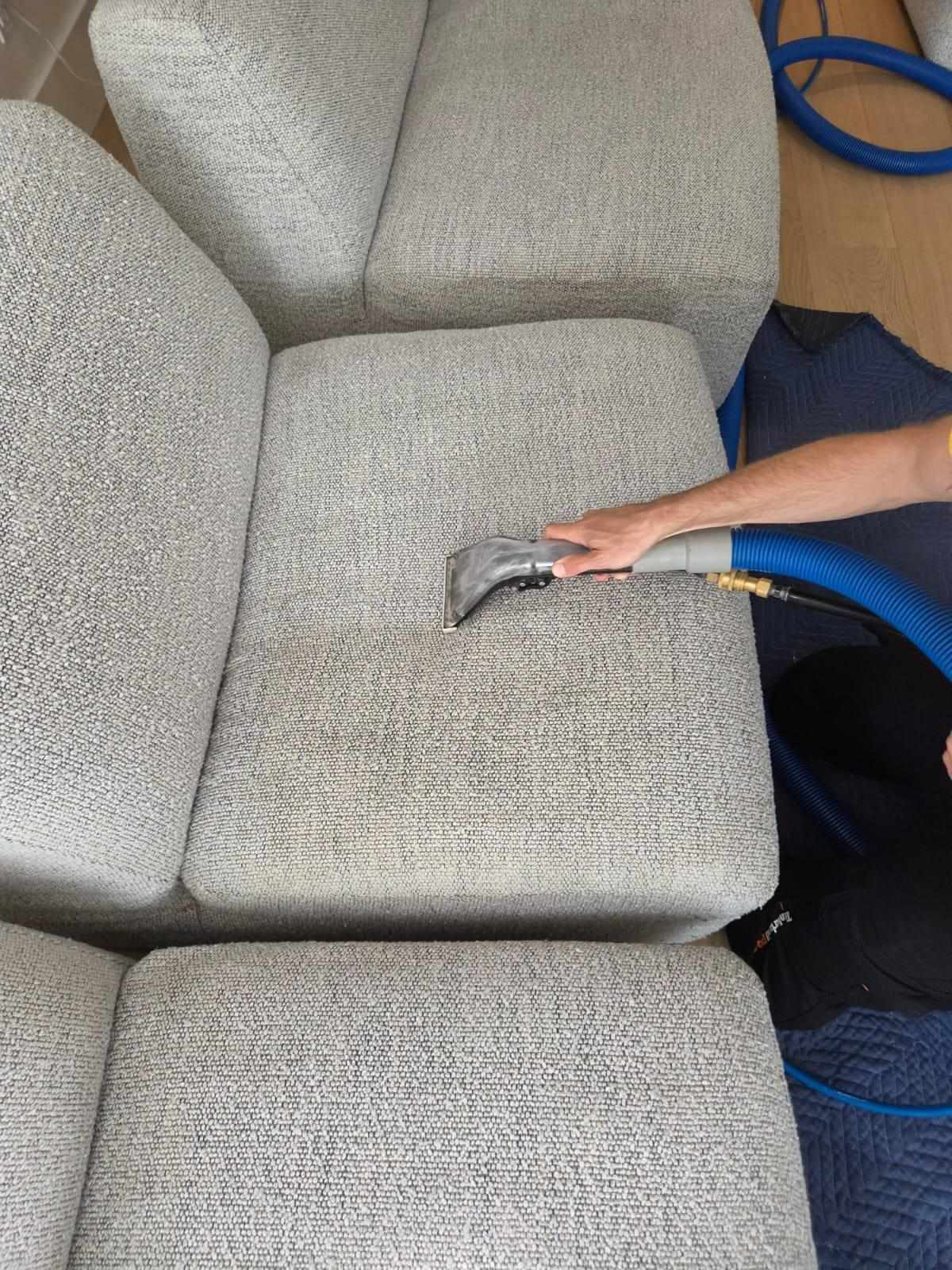
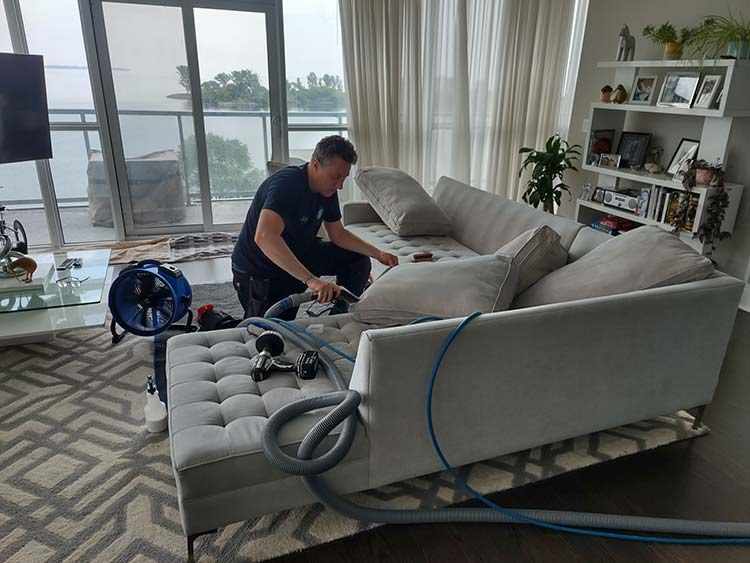
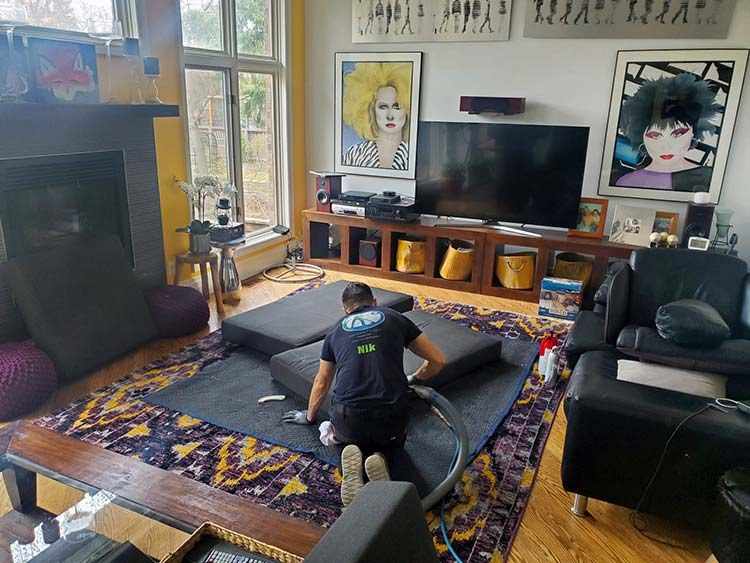
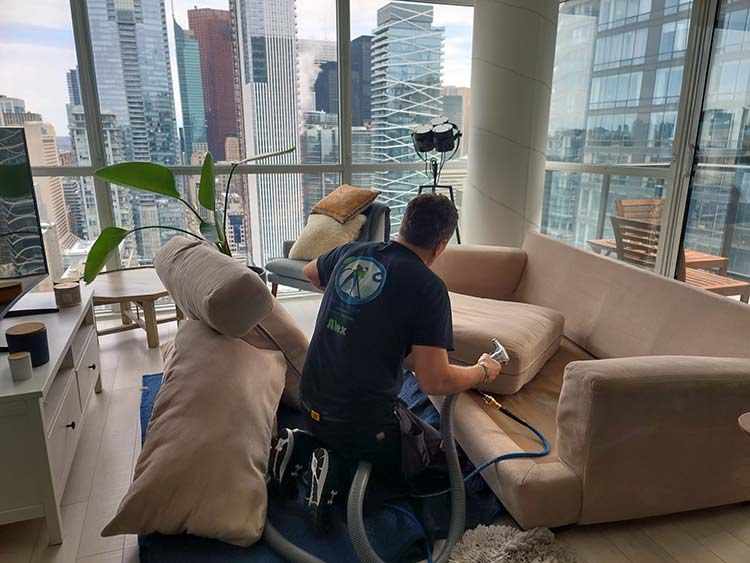
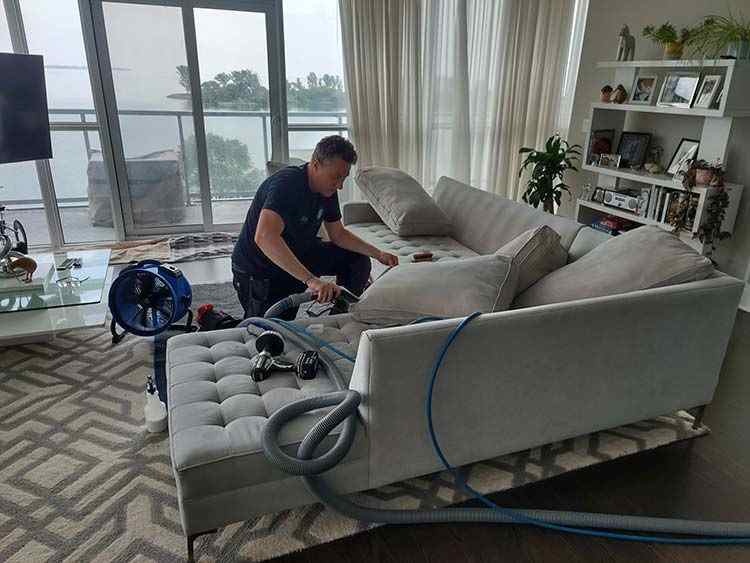
With our professional couch cleaning, we start with a fabric check and can find hidden spots with UV light. Then we apply a professional enzyme treatment that breaks down the uric acid at the source, and deep clean with controlled moisture so the couch isn’t over-wet. Most couches are dry in about 6–8 hours, our products are eco-friendly and pet-safe, and if you’re not happy with an area, we re-clean it. For carpets and rugs with the same problem, see our pet stain and odour removal service.
Not sure what you’re dealing with? Text us a few photos of the couch and its care tag at (647) 877-5977 for a free quote, or request a call back.